Companies teach things research doesn’t: real users, real deadlines, and the difference between a demo and something people rely on. For each one I’ve kept what the product does separate from what I personally did.
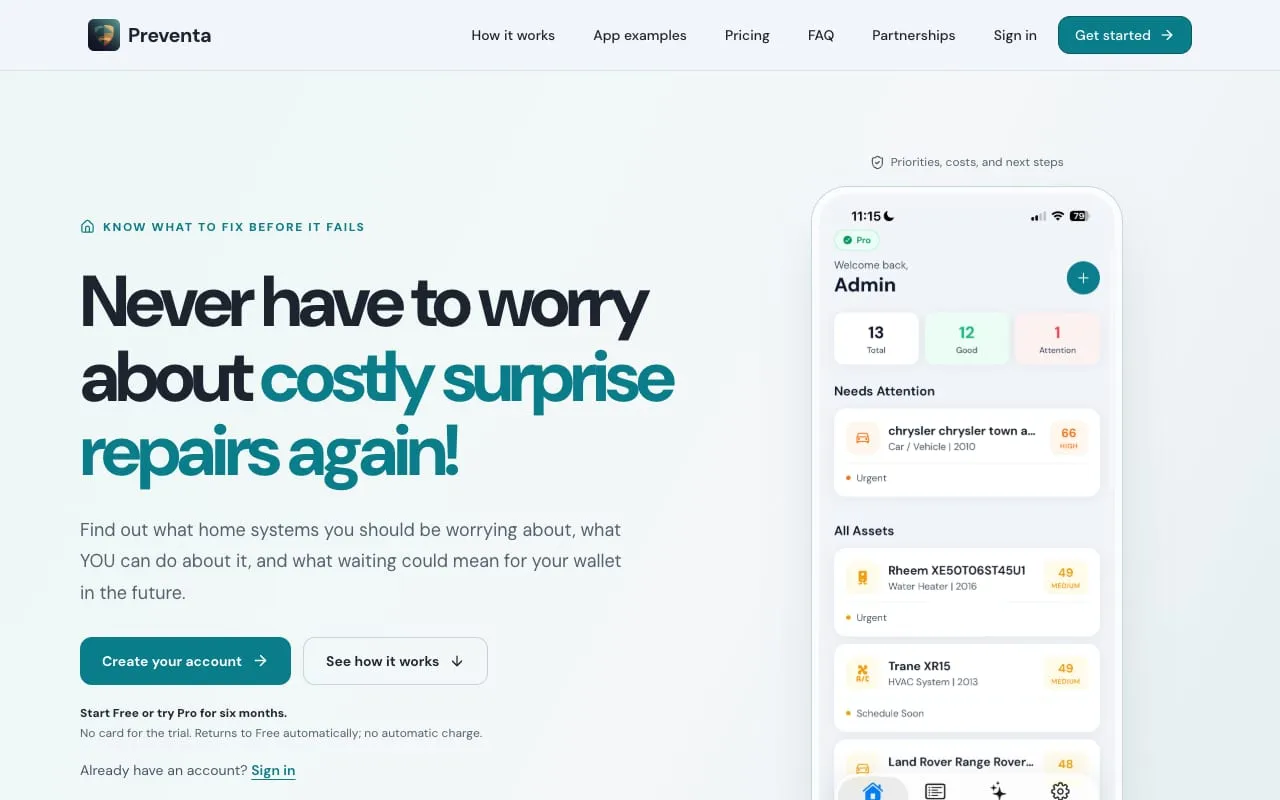
screenshots are the real, live sites
01 · Founder & CEO
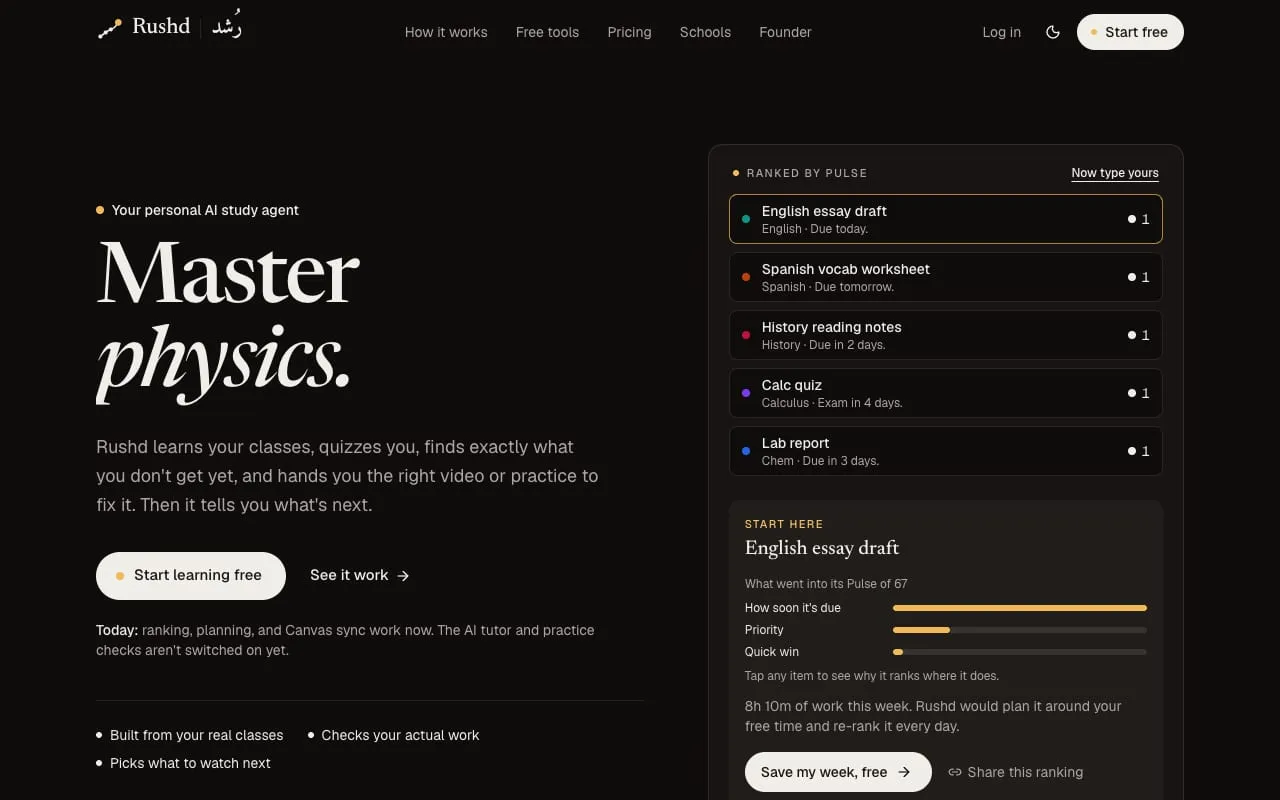
Rushd
An AI study agent and planner that tells high-school students what to do first.
Live
500+registrationsSign-ups, not active users, retained users or paying customers.
What the product does
Academic planning and weekly plans that re-plan when work is done, missed or added
Exam preparation, quizzes and topic mastery
Personalized study assistance
Progress tracking and streaks
Referrals
What I did
Designed and built the product, including a deterministic planning engine: eight named scoring terms (urgency, importance, overdue, exam proximity, effort and more) and a one-sentence reason for every ranking.
AI is optional by design: the core works without a model, and the model may rephrase a reason but never decides it.
Privacy as architecture: hashed passwords, server-side ownership checks on every change, no ad tracking.
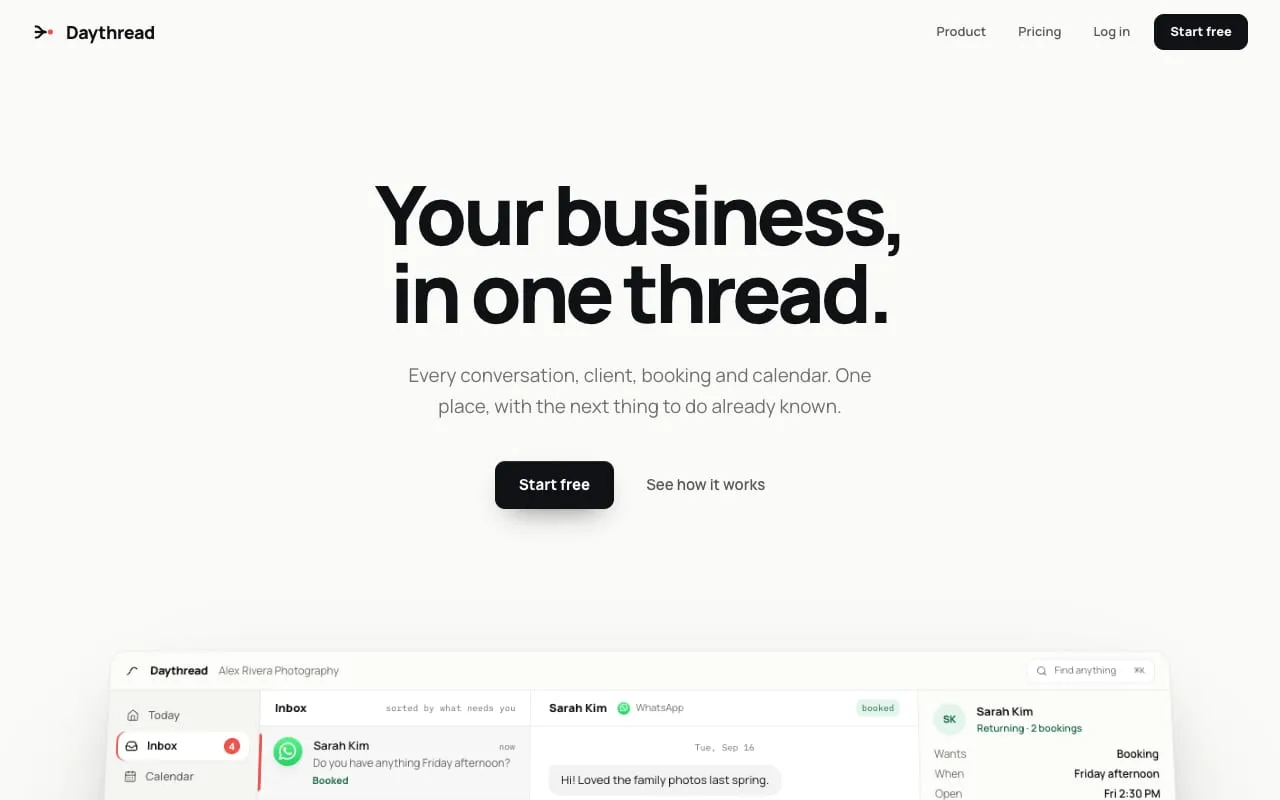
One inbox for small businesses: email, Instagram, WhatsApp, texts and bookings in a single thread.
2nd place · UW Seattle Summit Hackathon
2ndplace, UW Seattle Summit Hackathon
$1,000team startup funding
What the product does
Gmail, Instagram, WhatsApp Business, SMS and a booking page in one inbox
Bookings and Google/Apple calendar sync from inside a conversation
Payments as an outcome of the conversation, not another channel
What I did
Built the frontend, backend and every integration.
Hardened it for real customers after the event: fixed a payment-integrity bypass, rate-limited sign-in, encrypted stored channel credentials, made five simultaneous bookings for one slot produce exactly one.
Started it as LensFlow, a tool for photography studios, then generalized it; 100+ pull requests.